Flowcode vs QR Tiger: Honest Comparison (2026)
Flowcode vs QR Tiger compared on real pricing, free plan limits, and what happens when you cancel. Find the best Flowcode alternative in 2026.
This article was written by the QR Nova team. We build QR code software, which may inform our perspective.
Most Flowcode vs QR Tiger comparisons were written by review sites that rank both tools highly because both pay affiliate commissions. Neither platform's actual pricing appears clearly, no one tells you what happens to your codes when you cancel, and the "free plan" comparisons conveniently omit the scan caps that make both free tiers nearly useless in practice. If you're searching for a Flowcode alternative because the pricing stung, this is the comparison you're looking for. No affiliate varnish: Flowcode charges 3.5x more than QR Tiger for comparable entry-level functionality, QR Tiger's free plan is meaningfully better, and both platforms deactivate your dynamic codes the moment you stop paying.
- QR Tiger's free plan gives 3 dynamic codes (valid one year, 500 scans each) plus unlimited static codes. Flowcode's free tier gives 2 active dynamic codes and 500 total scan analytics events.
- At the first paid tier: QR Tiger starts at $7/month. Flowcode starts at $25/month for comparable feature access.
- Both platforms deactivate dynamic QR codes when you cancel. Printed materials become dead links.
- If neither pricing model fits and you need a Flowcode alternative with no scan caps: QR Nova's free plan has no expiration on static codes, and dynamic codes don't deactivate on plan cancellation.
Why this comparison exists: the Flowcode alternative search
Search volume for "flowcode alternative" has risen steadily through 2025 and into 2026. The pattern is consistent: users sign up for Flowcode, hit the 2-code free limit almost immediately, discover the next tier starts at $25/month, and start looking for something more proportionate to their actual needs.
QR Tiger is often the first Flowcode alternative they find, and it genuinely is cheaper. But the deeper question — what happens to your QR codes if you stop paying either platform — rarely gets answered directly. That's what this post is actually about.
Free plan comparison: what you actually get for $0
Start free — no subscription trap
Get startedFree plans are where the real difference between Flowcode and QR Tiger shows up. Both platforms offer free access, but the constraints are structured very differently.
Flowcode free plan (as of June 2026)
- 2 active dynamic QR codes
- 500 scan analytics events total (not per code, but across your entire account)
- Flowcode branding on all codes
- No custom domains
- No logo uploads without upgrading
- Account required to use any feature
The 500-scan-event ceiling applies across your entire account. Two codes sharing 500 analytics events means you lose visibility on both within a month for any code with real traffic. After 500 events, scans still work. You just stop seeing them. Your code doesn't break, but your analytics go dark.
QR Tiger free plan (as of June 2026)
- 3 dynamic QR codes (each with 500-scan tracking limit, valid for one year)
- Unlimited static QR codes with full design customization
- Logo uploads included on the free plan
- Custom colors and shapes available free
- No credit card required
- QR Tiger branding on dynamic codes
The key advantage is the unlimited static QR codes with design customization. If your use case is static codes — a restaurant menu URL, a business card, a WiFi network — QR Tiger's free plan covers it completely. Flowcode's free plan assumes you need dynamic codes and upsells from there.
Pricing comparison: paid tiers side by side
This is where the gap between Flowcode and QR Tiger gets hard to ignore. Both platforms use annual billing as the basis for their displayed prices. For a broader look at how these prices compare across all major platforms, see the QR code generator pricing comparison. Note: Flowcode has rebranded its paid plan names. Previously "Starter", it's now listed as "Pro Plus" on their pricing page as of June 2026. Prices verified against flowcode.com/pricing.
| Plan tier | Flowcode | QR Tiger |
|---|---|---|
| Entry paid | $25/month (Pro Plus) — 50 codes, 6K scans | $7/month (Regular) — 6 dynamic codes, 5K scans/month |
| Mid tier | $100/month (Teams) — 200 codes, collaboration | $16/month (Advanced) — unlimited dynamic codes, 20K scans/month |
| Upper mid | — | $37/month (Premium) — white label, bulk CSV, custom domains |
| Growth/Pro | $250/month (Growth) — 500 codes, API, custom domain | $89/month (Professional) — 1,200 codes, API, sub-users |
| Enterprise | Custom pricing | Custom pricing |
The gap is not subtle. For a team managing 50 QR codes with basic analytics, Flowcode requires $25/month. QR Tiger's Advanced plan at $16/month gives unlimited dynamic codes and 20K monthly scan events. That's significantly more headroom for less than two-thirds the price.
For enterprise-range features (API access, custom domains, bulk generation), Flowcode requires $250/month. QR Tiger Professional at $89/month covers the same requirements at a 3x lower price point.
Features compared: where each platform wins
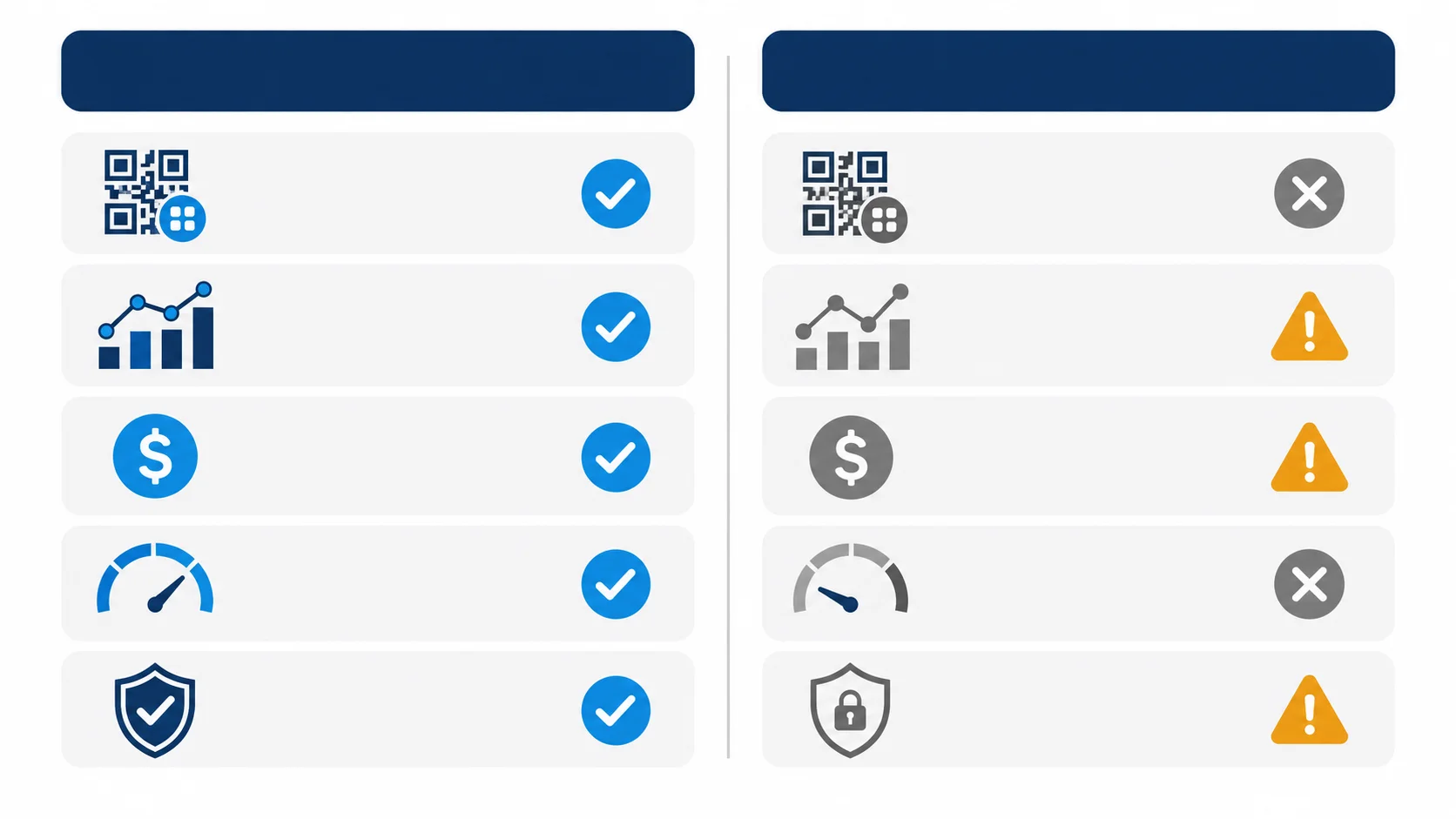
| Feature | Flowcode | QR Tiger |
|---|---|---|
| Free dynamic codes | 2 (500 total scan events) | 3 (500 scans each, 1-year validity) |
| Free static QR codes | Not offered | Unlimited, with full customization |
| QR code types | URL, landing page, link-in-bio | URL, PDF, vCard, WiFi, social, app store, email, SMS, 20+ types |
| Analytics | Location, device, scan count (from $25/month) | Location, device, browser, OS, time series (from $7/month) |
| Custom domain | From $250/month | From $37/month |
| Bulk generation | From $250/month | From $16/month via CSV |
| White label | Enterprise only | From $37/month |
| API access | From $250/month | From $35/month |
| Design customization | High (distinctive pixel-style codes) | High (20+ module shapes, gradient fills, logo embedding) |
| Landing pages | Yes — strong feature, included | Yes — link-in-bio and micropage builder |
| Compliance | GDPR + CCPA | GDPR + ISO 27001 certified |
Where Flowcode genuinely wins
Flowcode's design differentiation is real. Their organic, rounded QR patterns are visually distinctive in a category where most codes look identical. If your QR code will appear large on a poster or packaging, the difference is noticeable.
The custom landing page builder is also stronger than QR Tiger's equivalent. Flowcode's landing pages support video embeds, multiple CTAs, branded colors, and link-in-bio-style layouts without requiring the scanner to leave the Flowcode-hosted environment. If you need to control the full post-scan experience, Flowcode's landing page stack is worth the premium.
Where QR Tiger wins
QR Tiger wins on breadth, pricing, and feature access at lower tiers. Twenty-plus QR code types are available across all plans: PDF, vCard, WiFi, app store redirect, Google review, WhatsApp. Bulk generation via CSV upload starts at $16/month, not $250/month. Analytics data exports directly at mid-tier pricing. Flowcode's analytics export requires enterprise.
For agencies and resellers, QR Tiger's white-label option at $37/month is the most accessible in the category. Flowcode requires enterprise-tier negotiation for white labeling.
The cancellation problem both platforms share
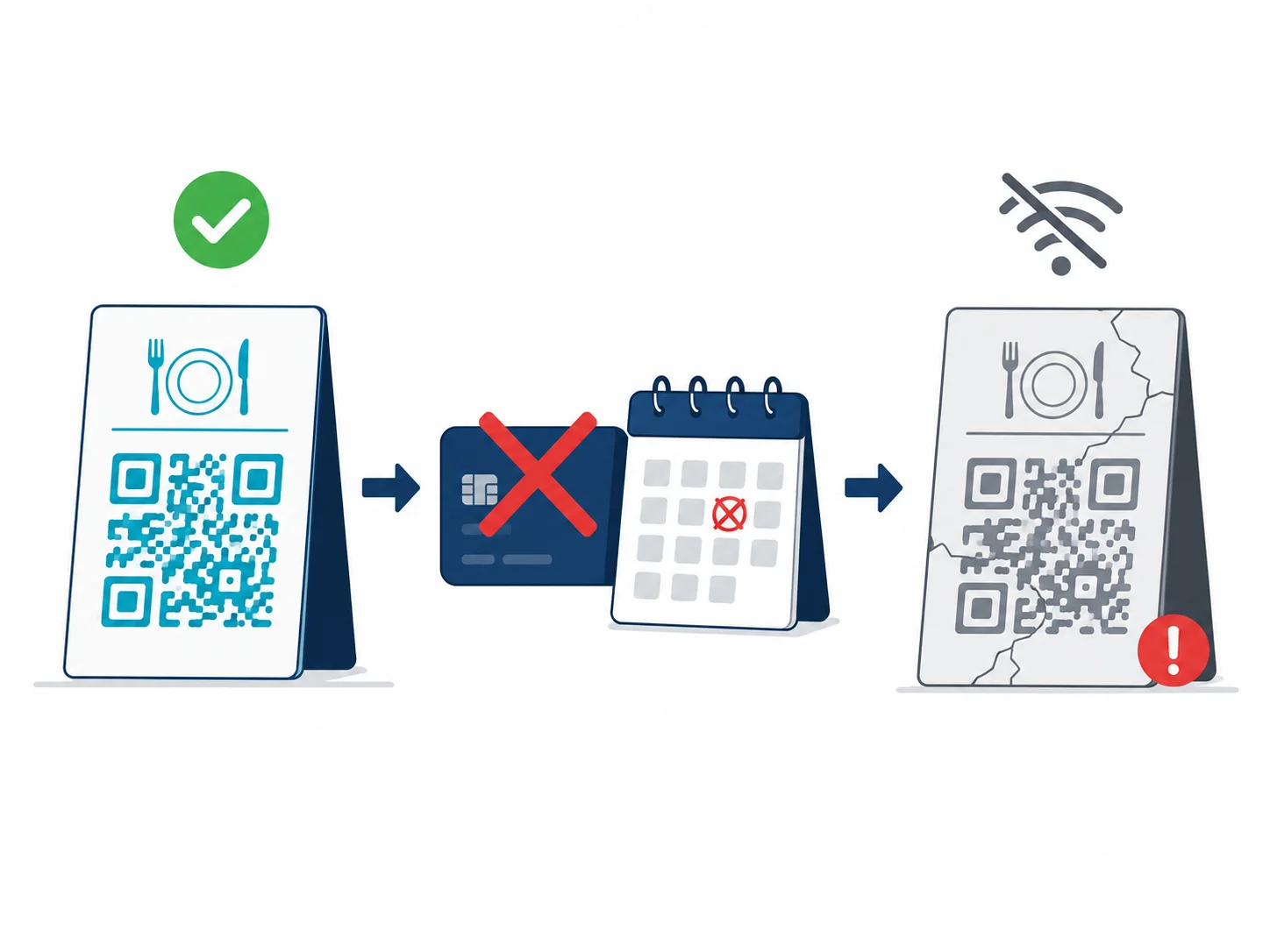
Dynamic QR codes from both Flowcode and QR Tiger work through a redirect: your code points to a short URL on the platform's servers, which routes to your destination. When you cancel your subscription, those redirect servers stop serving your codes.
Neither platform hides this. Both disclose it in their terms. But the operational implication gets misunderstood until it's too late. If you have printed materials with QR codes pointing to either platform's redirect infrastructure, those codes stop working when your subscription lapses.
A restaurant that prints 500 table tents with a dynamic QR code doesn't just lose analytics when they cancel. They lose the code entirely. Every table tent becomes dead material. A product package printed with a Flowcode-powered QR code is junk from the moment your credit card expires.
Neither Flowcode nor QR Tiger offers a code preservation option where codes remain scannable post-cancellation. This single factor is the most important consideration in choosing a QR platform — and the one most comparison articles skip entirely.
When to choose Flowcode over QR Tiger
Flowcode makes sense when:
- Your brand requires visually distinctive QR codes and the premium appearance justifies the price delta
- You need Flowcode's custom landing page builder as a core feature (it's genuinely better than QR Tiger's equivalent)
- You're a marketing agency managing client campaigns where UX presentation matters more than cost
- Your budget supports $25+/month and you'll use the full Starter tier feature set
When to choose QR Tiger: the most common Flowcode alternative
QR Tiger makes more sense in most other scenarios:
- You need more than URL-based QR codes (QR Tiger supports 20+ types; Flowcode is primarily URL-focused)
- Budget is a real constraint: $7/month vs $25/month is a 3.5x difference for comparable entry-level access
- You need bulk generation, API access, or custom domains at a mid-market price point
- Your use case involves vCard, WiFi, PDF, or other non-URL code types
- You're an agency needing white-label output without paying enterprise rates
When neither is the right answer: the case for a different Flowcode alternative
Both Flowcode and QR Tiger are subscription-first platforms. Their business models require ongoing payment for codes to keep working. That's a legitimate model. It has one structural failure, though: any interruption in billing — missed payment, cancelled subscription, company restructuring, budget freeze — deactivates the codes on physical materials that are still in circulation.
Consider a different approach if:
- Your codes will outlive your subscription commitment (product packaging, wall signage, permanent installations)
- You want dynamic codes but can't commit to an ongoing monthly fee
- You need static codes and don't want to create an account or pay for them
- You're evaluating platforms for a business that may go through budget fluctuations
How QR Nova approaches the subscription problem differently
QR Nova is built around a different assumption: static codes should be free and permanent by default, and dynamic codes shouldn't become liabilities when you stop paying. Static codes require no account, no scan limits, no watermarks, no expiration. The URL is encoded directly in the image. For most QR code use cases (restaurant menus, business cards, WiFi networks, product pages), static codes cover everything at zero cost.
For dynamic codes, QR Nova's model works differently from Flowcode and QR Tiger. Codes remain scannable even after you cancel a paid plan. The redirect infrastructure stays active because breaking printed materials is the wrong outcome for users who committed to a physical print run. That's a deliberate architectural choice, not a marketing claim.
If you're still evaluating which Flowcode alternative fits your workflow, the best QR code generator comparison covers QR Tiger, Flowcode, Bitly, and QR Code Monkey side by side with current pricing data. If you're specifically evaluating platforms for permanent QR codes, that page walks through the technical distinction between static and dynamic redirect models.
If you're currently paying for Flowcode's Starter tier and getting limited value, the QR Nova pricing page shows the current plan structure. It's designed to avoid the floor-pricing problem that makes Flowcode's entry tier hard to justify for small teams.
Frequently asked questions
Is Flowcode better than QR Tiger?
QR Tiger outperforms Flowcode on feature depth, analytics, and free plan generosity. Flowcode's free tier gives you 2 active codes with 500 scan events — QR Tiger gives 3 dynamic codes valid for a year with 500 scans each plus unlimited static codes. At the paid tier, QR Tiger's entry point is $7/month vs Flowcode's $25/month for comparable functionality.
Why is Flowcode so expensive?
Flowcode's pricing is positioned as a premium design-first product. The entry paid plan (previously called Starter, rebranded Pro Plus as of 2026) starts at $25/month billed annually and limits you to 50 active codes and 6,000 scan analytics events. The jump to the Growth plan is steep — there is no affordable middle tier for teams with modest but real QR needs. This pricing gap is the most common complaint in user reviews as of 2026.
What happens to my QR codes if I cancel Flowcode?
Dynamic QR codes on Flowcode deactivate when you cancel your subscription. Scanners see a broken redirect or error page. Static codes embedded directly in the image are unaffected, but Flowcode's primary value proposition is dynamic codes — so cancellation is operationally significant if you have printed materials in circulation.
What is the best Flowcode alternative in 2026?
The best Flowcode alternative depends on what you need. For budget-conscious users: QR Tiger at $7/month has 3.5x more features per dollar than Flowcode's Starter. For teams wanting dynamic codes with no subscription-expiry risk: QR Nova offers permanent static codes free plus dynamic codes that don't deactivate on cancellation. For enterprise: QR Tiger Business at $35/month includes API, custom domains, and team management.
Does QR Tiger have a free plan?
Yes. QR Tiger's free plan includes 3 dynamic QR codes (500 scans each), unlimited static codes with full customization, and no credit card required. The free plan doesn't expire. As of May 2026, this is one of the more generous free tiers in the category.
Is Flowcode a scam?
Flowcode is a legitimate product — not a scam. The frustration users express stems from aggressive upselling, a restrictive free tier (2 codes, 500 scans), and a pricing structure where meaningful functionality requires $25/month or more. When users try to scale modestly, there is no affordable middle tier, which creates genuine frustration and accounts for negative reviews across G2 and Trustpilot.
Related articles
QR Code Generator Comparison (2026): Features Side by Side
QR code generator comparison for 2026: static codes, scan limits, expiry, pricing, and SVG export across QR Nova, QR Tiger, Uniqode, Flowcode, and Bitly.
Best Free QR Code Generator (2026): Honest Comparison
Best free qr code generator ranked by what actually matters: scan permanence, no-account access, and real feature limits. No affiliate bias.
Best QR Code Generator (2026): Ranked Without Affiliate Bias
Best qr code generator 2026, ranked on scan permanence, real pricing, and honest limits. QR Tiger, Flowcode, Bitly, and QR Nova compared side by side.
Start free — no subscription trap
Get started