Dynamic QR Code Scam: 2 Traps to Avoid (2026)
A dynamic QR code scam has two forms: predatory platforms that deactivate your codes, and criminals who swap the destination. How to spot both.
This article was written by the QR Nova team. We build QR code software, which may inform our perspective.
Search "dynamic QR code scam" and you will find two completely different problems wearing the same name, and most articles only cover one of them. One set warns you about hackers on parking meters. The other warns you about sneaky subscription billing. Both are real, and they share one root cause. A dynamic QR code's destination can be changed after the code is printed. That single feature is what makes the codes useful, and it is exactly what both predatory platforms and criminals exploit.
TL;DR
- Two scams, one name. "Dynamic QR code scam" means either a platform that deactivates your codes unless you pay, or a fraudster who swaps a code's destination to phish you.
- The risk is the redirect. Dynamic codes point to a server-controlled URL. Whoever controls that URL controls where your code sends people — including after it is printed.
- Quishing is surging. 12% of phishing attacks contained a QR code in 2025, and QR-based phishing emails jumped from ~47,000 in August to over 249,000 in November 2025 (Keepnet).
- Static codes sidestep both. A static QR code bakes the URL into the image — it cannot be remotely repointed and never expires.
The Two Meanings of "Dynamic QR Code Scam"
Start free — no subscription trap
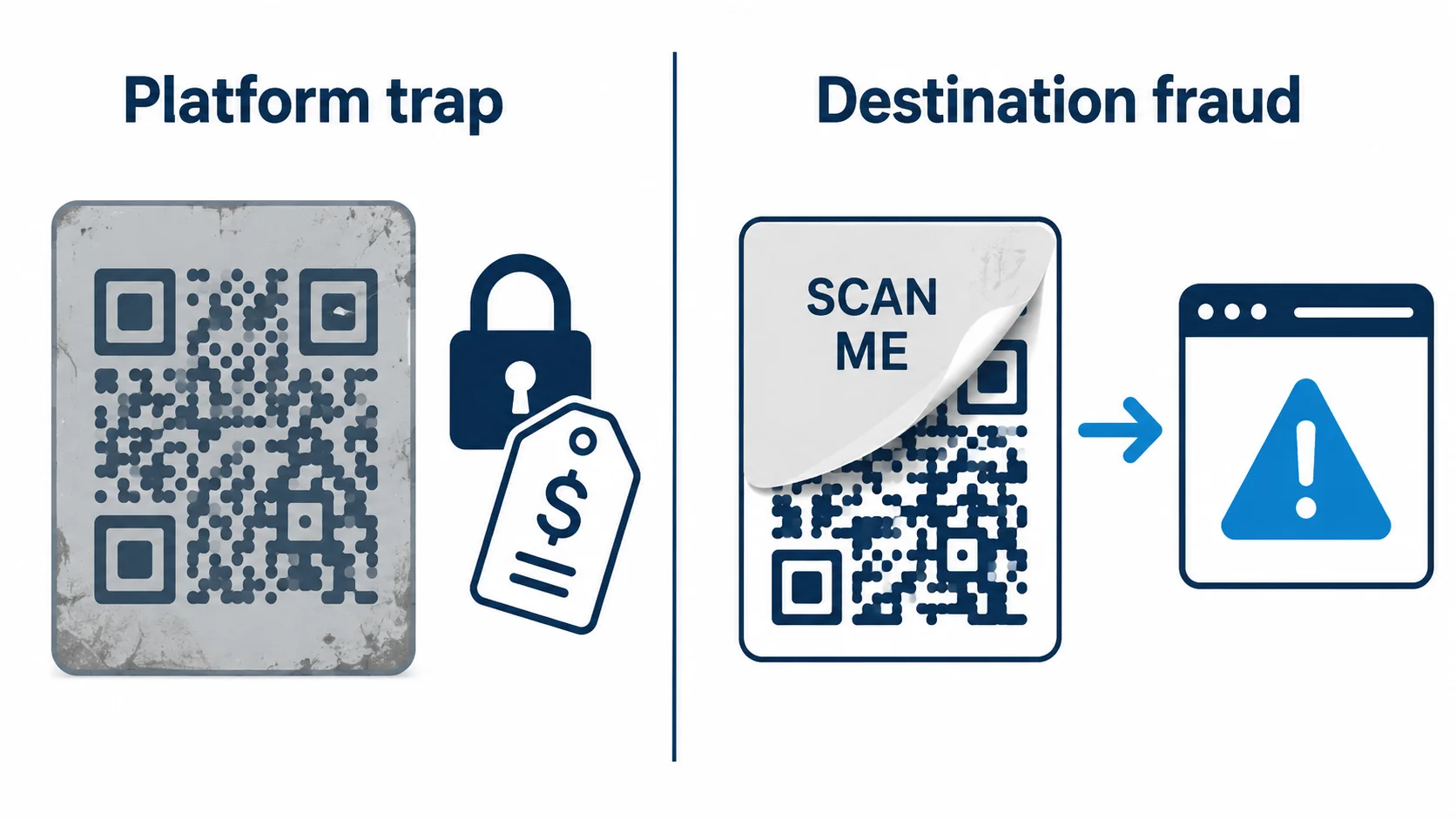
Get startedA dynamic QR code scam is any fraud that abuses the editable destination of a dynamic QR code. There are two families. The first is commercial: a QR code platform uses the fact that your printed codes depend on its servers to extract a recurring payment. The second is criminal: an attacker controls or replaces a code so it points to a malicious site. The mechanism is identical in both cases — control over a redirect — only the actor changes.
This distinction matters because the defenses are different. You beat the billing trap by reading pricing terms and choosing the right code type. You beat destination fraud by checking URLs before you act. Generic "be careful with QR codes" advice fails because it blurs the two into one vague warning that protects you from neither.
What makes a dynamic code different
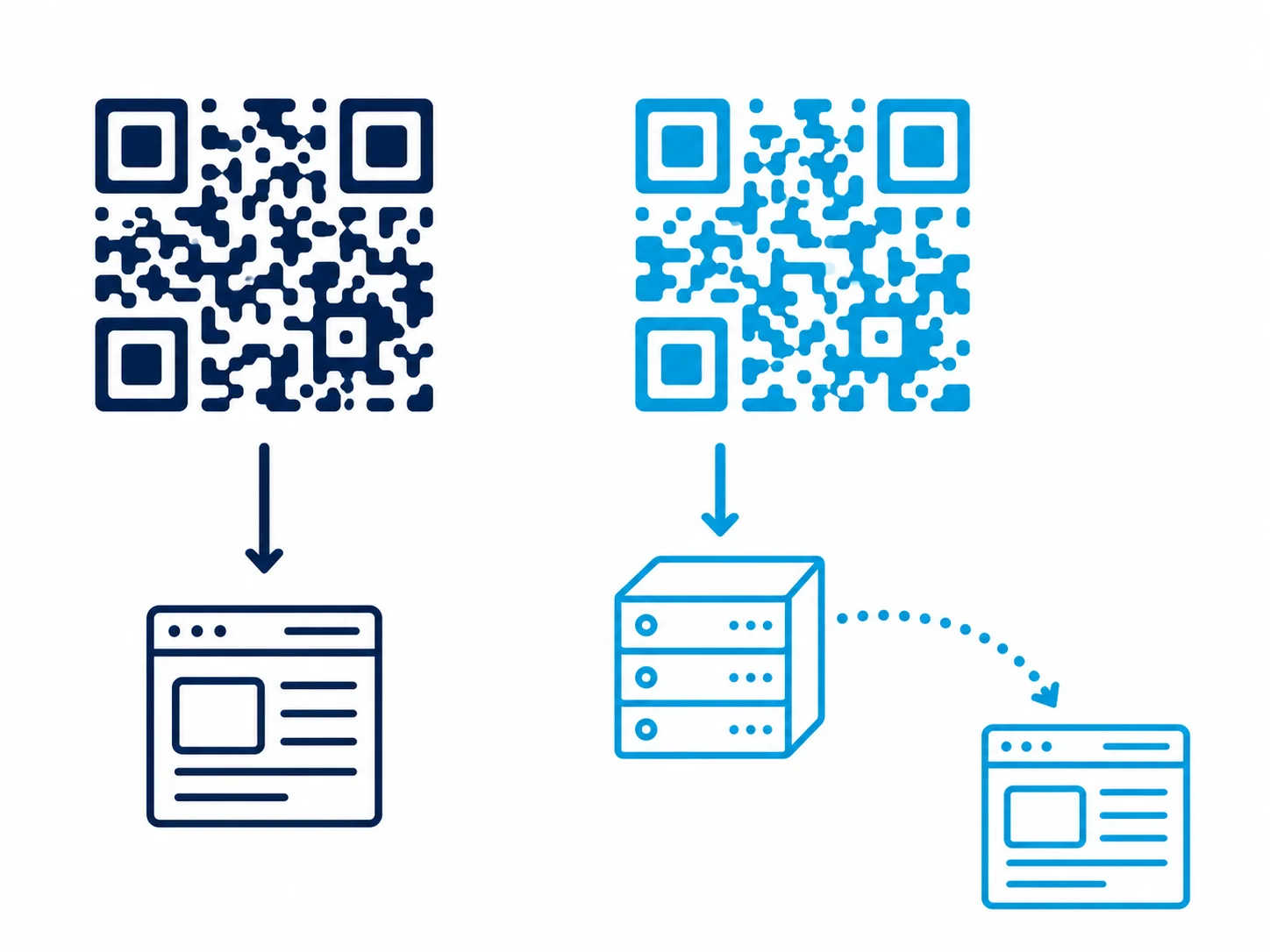
A dynamic QR code encodes a short URL that lives on a provider's server, and that server redirects each scan to your real destination. A static QR code encodes the destination directly in the black-and-white pattern, with no server in between. The difference matters because a dynamic code's behavior is mutable: the same printed image can send people to different places over time. Useful for marketers. Extremely useful for scammers. For the full mechanics, see how dynamic QR codes work.
Scam #1: The Platform That Holds Your Codes Hostage
This is the version most QR Nova readers run into first. A platform offers "free" dynamic QR codes, you generate them, print them on menus, packaging, or signage, and then the codes stop working unless you start paying. The codes are already in the physical world, so the platform has leverage: reactivate by subscribing, or watch every printed code die.
QRFY states that dynamic codes created during its 7-day free trial deactivate when the trial ends. QR Tiger caps free dynamic codes at 500 scans. Several platforms — documented across 2025 and 2026 — auto-renew annually by default with non-refundable terms. The U.S. Federal Trade Commission has been targeting deceptive auto-renewal and "negative option" billing under its updated rule since 2024. We cover the billing mechanics in depth in our QR code subscription scam deep dive and list specific offenders in QR code generator scams to avoid.
The tell is simple: if a code you printed can be switched off by someone else's billing system, it was never really yours — you were renting access, not owning a QR code. We break down the vendor-leverage problem in full at QR code vendor lock-in.
Scam #2: The Criminal Who Swaps Your Destination
The second scam is straight fraud, and the numbers show it has exploded. Because a dynamic code points to an editable URL, an attacker who controls the account or simply pastes a fake sticker over a real code can send scanners to a phishing page that looks legitimate.
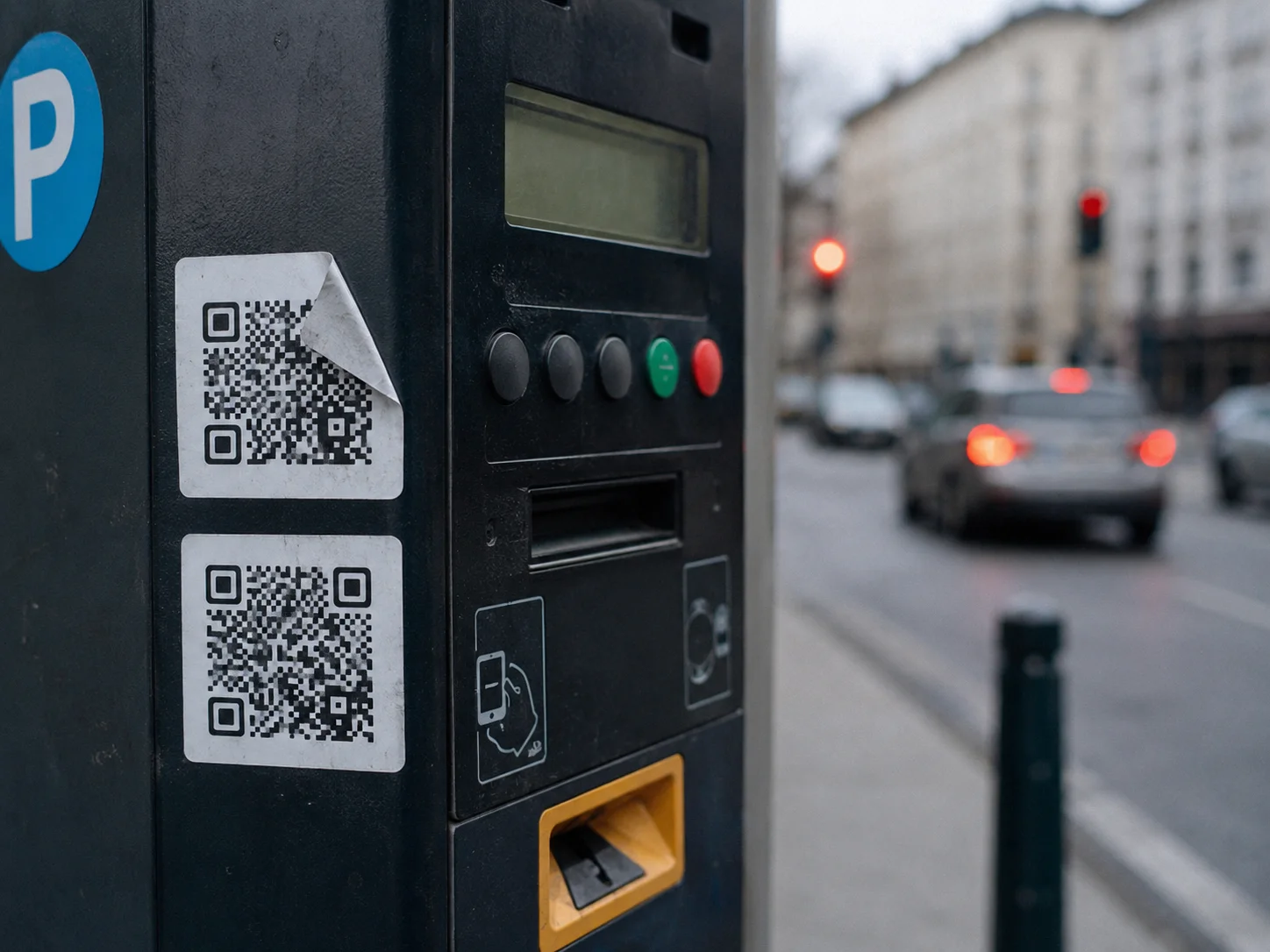
The most visible example is parking meters. In 2025, cities across the U.S. reported fake QR stickers placed over official payment codes: Austin found 29 compromised parking pay stations, Houston discovered fake codes at multiple locations, and New York City's Department of Transportation issued public warnings. The fraudulent codes pointed to typo-domains — "poybyphone" instead of the real "paybyphone" — that harvested card details.
It is not limited to street furniture. On July 31, 2025, the FBI's Internet Crime Complaint Center issued alert PSA250731 about unsolicited packages containing QR codes that, when scanned, prompt for personal and financial data or trigger a malware download. The FTC issued a parallel warning in January 2025 about unexpected packages with QR-coded notes.
Why "quishing" works
Quishing — phishing via QR code — beats traditional defenses because the malicious URL is hidden inside an image. Email filters can't read it. Neither can you, at a glance. According to Keepnet's 2025 analysis, 12% of phishing attacks contained a QR code, 26% of all malicious links were delivered via QR code, and 73% of Americans scan codes without checking where they go first. QR-based phishing emails surged from roughly 47,000 in August 2025 to over 249,000 by November 2025. Victims lost about $1,225 each on average, per CNBC's July 2025 reporting.
How to Tell a Scam Code From a Safe One
Before you scan or act, run three checks. First, look at the physical code: is it a sticker placed over another code? Peel-and-stick fraud is the most common street-level attack. Second, read the URL preview your phone shows after scanning — misspelled domains, unfamiliar shorteners, and unexpected login or payment pages are red flags. Third, ask whether you expected this code at all; unsolicited codes on packages, emails, or letters are the FBI's top warning sign.
For codes you create, the test is different. Scan your own code and check the URL it resolves to. If it opens the platform's short domain (qr1.io/abc123, flowco.de/xyz), your code depends on that platform's servers and can be deactivated or repointed. If it resolves to your own domain directly, it is closer to static and harder to hijack. We walk through the survival test in do QR codes expire.
When a Dynamic Code Is Still the Right Call
Dynamic codes are not the villain. The editable destination is genuinely valuable, and avoiding dynamic codes entirely would be the wrong lesson. The risk is provider trust and account security, not the technology.
Think of it at three levels. For a restaurant table menu that will not change (low complexity), a static code is the safer, permanent choice: nothing to deactivate, nothing to repoint. For a seasonal retail campaign where the landing page changes monthly (mid complexity), a dynamic code from a transparent provider earns its keep through editing and scan tracking. For a national enterprise rollout (high complexity), a dynamic code on your own custom domain, with team access controls and audit logs, gives you the editing power without handing a third party the kill switch. The deciding question is never "dynamic or static" in the abstract. It is "who controls the redirect, and can they turn it off or change it without me."
How QR Nova Removes Both Risks
QR Nova is built on the assumption that a code you create should stay yours. Static codes are free and need no account: the destination is in the image, so there is nothing to deactivate and nothing for an attacker to remotely repoint. Dynamic codes, when you need editing and tracking, never expire because you stopped paying. No trial-deactivation trap, no annual auto-renew surprise. You can point dynamic codes at your own domain so scans are not hostage to a short-URL server we control. Pricing is flat and published, with no hidden scan caps. See the full breakdown on our pricing page or read why QR Nova exists.
That does not make you immune to sticker fraud in the physical world — no provider can stop a criminal from pasting a fake code over yours on a parking meter. But it removes the provider-side scam entirely, and it gives your customers a destination on your own domain that is easier to verify as genuine.
Frequently asked questions
What is a dynamic QR code scam?
The term covers two distinct frauds. The first is a billing trap: a platform lets you create dynamic QR codes for free, you print them, then the codes deactivate unless you pay a subscription. The second is destination fraud: because a dynamic code's target URL can be edited at any time, criminals swap the destination or paste a fake code over a real one to send you to a phishing site.
Can a dynamic QR code be hacked after I print it?
Not the printed code itself — the black-and-white pattern never changes. What can change is where it points. A dynamic QR code redirects through the platform's server, so anyone who controls that account (or the platform itself) can repoint the code to a different URL without touching your printed material. That is the core risk that static codes do not have.
How do I know if a QR code I scanned is a scam?
Check the URL before you act on it. Most phones show a preview of the destination after scanning. If the domain is misspelled (poybyphone instead of paybyphone), uses a URL shortener you do not recognize, or asks for a password or payment on a page you did not expect, stop. The FBI advises treating unsolicited QR codes the same as unsolicited links.
Are dynamic QR codes safe to use for my business?
Yes, if you control the account and use a transparent provider. Dynamic codes are genuinely useful for tracking and editable destinations. The risk is provider-side: pick a platform that does not deactivate codes when you stop paying, and never let trial codes go onto permanent printed materials before you have confirmed the cancellation policy.
What happens to a dynamic QR code when the trial ends?
On most platforms the code stops working. Dynamic codes redirect through the provider's short-URL servers, and those servers refuse to serve codes on unpaid or expired accounts. QRFY states that codes created during its 7-day free trial deactivate when the trial ends. The scan still reads, but the redirect fails and the user sees an error.
How much money do QR code scams cost victims?
Victims of QR code phishing lost around $1,225 each on average in 2025, according to reporting compiled by CNBC in July 2025. The FBI's Internet Crime Complaint Center issued a public alert (PSA250731) on July 31, 2025 about scam packages containing fraudulent QR codes after a measurable rise in complaints.
Are static QR codes safer than dynamic ones?
For permanence and tamper-resistance, yes. A static QR code encodes the destination directly in the image, so it cannot be remotely repointed and never expires. The trade-off is that you cannot edit it or track scans. For printed materials you will not change, static is the safer default. For campaigns that need editing, use a dynamic code from a provider you trust.
Related articles
QR Code Generator Scams to Avoid (2026)
QR code generator scam patterns exposed: free trial traps, scan caps, held-hostage codes. How to identify them before you print. Real examples, April 2026.
Free QR Code Generator With Unlimited Scans
Most free QR codes stop redirecting after 500 scans. QR Nova static codes have no scan cap and never expire — free, no sign-up, no credit card.
Do QR Tiger Codes Expire? What Happens When You Cancel
Do QR Tiger codes expire? Free codes die at 500 scans, paid codes deactivate when you cancel. Which codes survive, and how to avoid the trap.
Start free — no subscription trap
Get started