Free QR Code Generator With Unlimited Scans
Most free QR codes stop redirecting after 500 scans. QR Nova static codes have no scan cap and never expire — free, no sign-up, no credit card.
This article was written by the QR Nova team. We build QR code software, which may inform our perspective.
Search "free QR code generator unlimited scans" and every result promises exactly that on the homepage. Then you read the plan details and find a number: 500 scans, sometimes 1,000, after which the code stops working. A genuinely unlimited QR code is a static code — the URL is encoded in the image itself, so no server counts the scans and nothing caps them. Dynamic codes on most free plans meter every scan and cut the redirect once you cross the limit, usually without warning. The homepage says "unlimited." The pricing page says otherwise.
TL;DR
- Static QR codes have no scan limit because no server is involved in a scan — your phone reads the URL directly off the image.
- Dynamic codes on free tiers cap scans: QR Tiger and Flowcode both stop redirecting at 500 scans (published pricing, August 2026).
- At the cap, the code still scans but redirects to the platform's upgrade page instead of your destination — a silent failure on printed material.
- QR Nova gives unlimited scans on static codes with no account, and keeps dynamic codes scan-unlimited on the free plan too.
How QR Code Scan Limits Actually Work
Generate a QR code with no scan limit
Get startedA scan limit only exists when something is counting. Static and dynamic QR codes are counted differently, and that difference decides whether "unlimited" is real or marketing.
A static QR code encodes your destination URL directly into the black-and-white module pattern, following ISO/IEC 18004, the international QR standard. When someone scans it, the phone camera decodes the pattern and opens the URL. No request reaches the generator that made the code. There is no counter, no account, no server in the loop — so there is nothing that can impose a limit. A static code scanned once and a static code scanned ten million times are the same code doing the same thing.
A dynamic QR code encodes a short redirect URL that points at the platform's server. Every scan is an HTTP request: the phone hits the platform, the platform looks up your destination and forwards the visitor. That round trip is what makes dynamic codes editable and trackable — and it is also the thing that gets metered. Each scan is logged. Once the logged total crosses the plan's limit, the platform changes what the redirect returns.
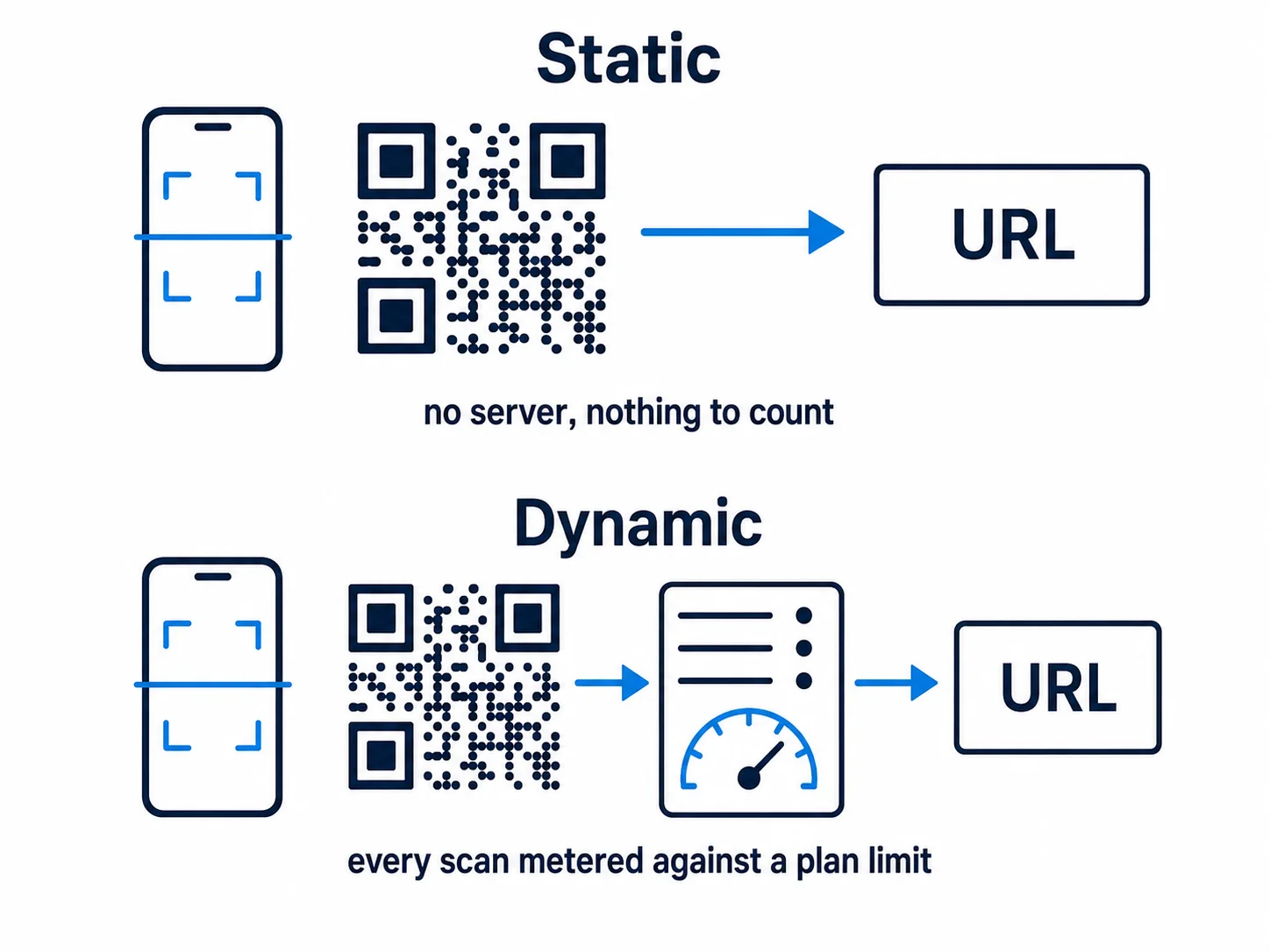
So "unlimited scans" means one thing for static codes and something weaker for dynamic ones. For a static code, unlimited is structural. For a dynamic code, unlimited is a plan tier you are paying to stay on.
Which "Free" QR Generators Cap Your Scans
These are the free-tier scan limits on widely used platforms, based on their published pricing pages as of August 2026. Plans change often — treat these as a prompt to check, not a permanent record.
| Platform | Free-tier dynamic scan limit | What happens at the cap |
|---|---|---|
| QR Tiger | 500 scans (across up to 3 free dynamic codes) | Redirect stops; code routes to an upgrade prompt |
| Flowcode | 500 scans on the free plan | Redirect disabled until you upgrade |
| Uniqode (formerly Beaconstac) | Free trial, not a free tier — dynamic codes deactivate when the 14-day trial ends | Code stops redirecting at trial end regardless of scan count |
| QRFY | Dynamic codes created on the 7-day trial deactivate when it ends | Redirect disabled at trial end |
| Bitly | Free plan includes a limited number of QR codes with monthly scan reporting caps | Scan tracking and, on some plans, redirects restricted past the limit |
According to QR Nova's review of these published pricing pages, 500 scans is the most common free-tier ceiling — QR Tiger and Flowcode share the exact same number. For a code on a table tent or a shop window, 500 scans is a few weeks of normal traffic, not a safety margin.
Static codes from these same platforms generally have no scan limit, because there is nothing to meter. The limit is a property of the dynamic redirect, not of the platform. For a fuller breakdown of what each plan costs, see our QR code generator pricing comparison.
What Happens When You Hit the Scan Cap
The scan cap failure is quiet, which is what makes it expensive. The QR code image is undamaged, so a phone camera still recognizes it and still "scans" successfully. The phone shows a link and opens it. What changed is the destination: instead of your menu or your landing page, the visitor lands on the platform's "this code has reached its limit, upgrade to reactivate" page.
From the business side, nothing looks broken. The code scans in a quick test because your own test scans might be within the remaining budget, or because you are looking at the image and not the redirect. The problem surfaces days later through customer complaints, or not at all — many people who hit a dead QR code just give up and never tell you.
The cost is the reprint, not the subscription. A café that prints 200 table cards at roughly $2 each has $400 committed to physical material. If the code deactivates at 500 scans, those cards are now pointing customers at an upsell page, and fixing it means a new code and a $400 reprint. In our review of user complaints on Reddit and review sites through mid-2026, reprint costs — not subscription fees — are the larger share of the money people lose to QR code limits. The related mechanism, where codes die on a billing lapse rather than a scan count, is covered in our QR code subscription trap writeup.
How to Test for a Scan Cap Before You Print
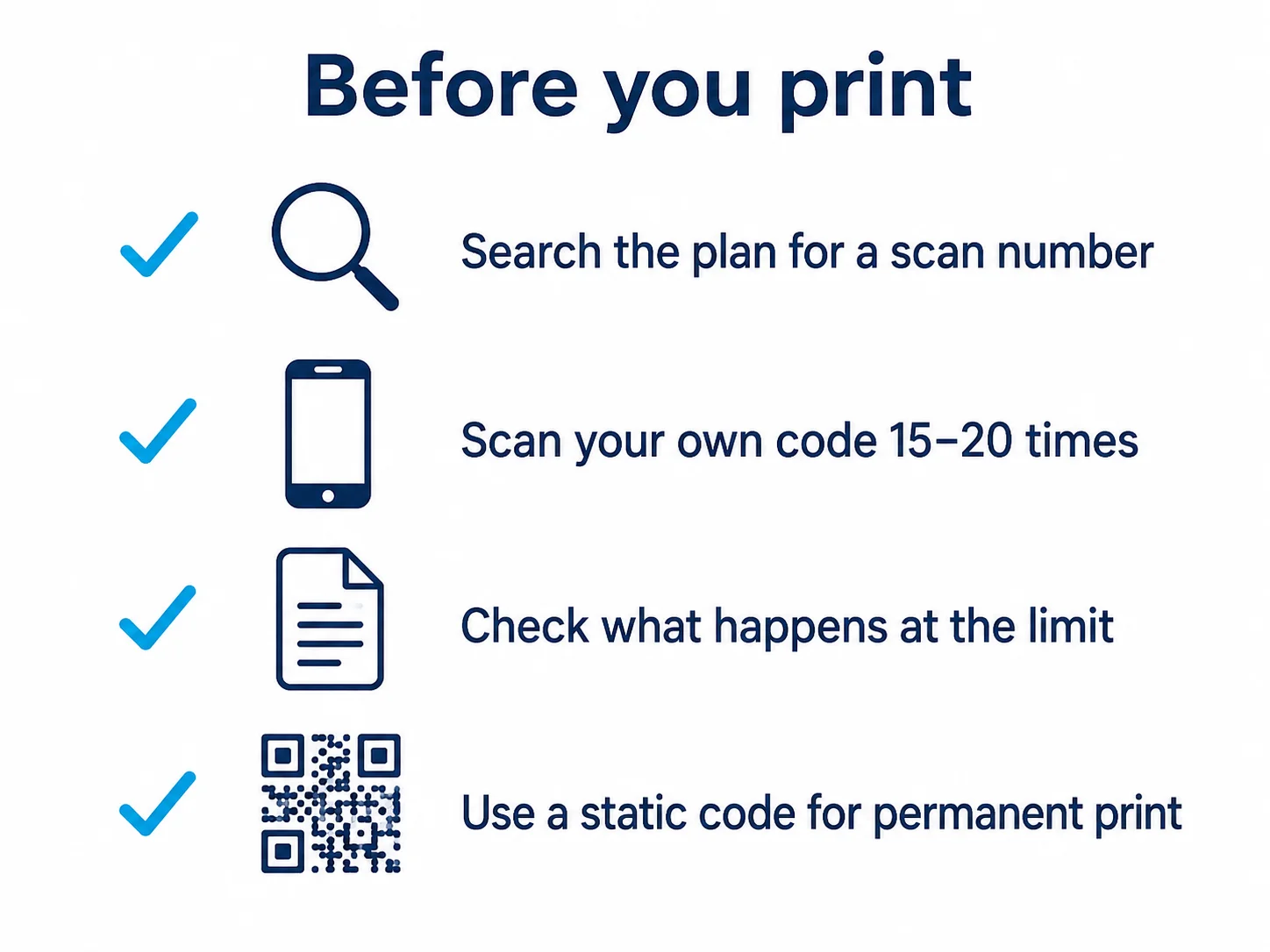
Before a code goes anywhere near a printer, run these checks.
1. Search the plan for a number
Open the pricing page and look for "scans," "views," or "visits" next to a figure. If the free plan lists a scan number at all, that is your ceiling. If the page is vague or hides pricing entirely, treat that as a red flag rather than a good sign.
2. Scan your own code 15 to 20 times
Use a few different phones if you can. Confirm every scan reaches your actual destination, not a platform page. This does not prove the cap is high, but it catches codes that are already throttled or misconfigured.
3. Check what the platform says happens at the limit
Some platforms stop redirecting. Some keep redirecting but stop recording analytics. Some deactivate the code entirely. The plan's help docs usually spell this out — if they do not, assume the worst case.
4. For anything permanent, use a static code
If the destination URL is stable — a homepage, a product page, a contact page, a WiFi network — a static code removes the question. There is no cap to test for because there is no counter. See static vs dynamic QR codes for how to decide.
Static vs Dynamic: Which One Gives You Unlimited Scans
Both types can be free. Only one is unlimited without a plan attached.
Static QR code: unlimited scans, permanently, with no account. The URL is in the image. The trade-off is that you cannot change the destination after printing, and you get no scan analytics.
Dynamic QR code: editable destination and scan analytics, but the redirect runs on a server that someone has to pay for. "Unlimited scans" on a dynamic code is only as durable as the plan you are on.
Matching the code to the job:
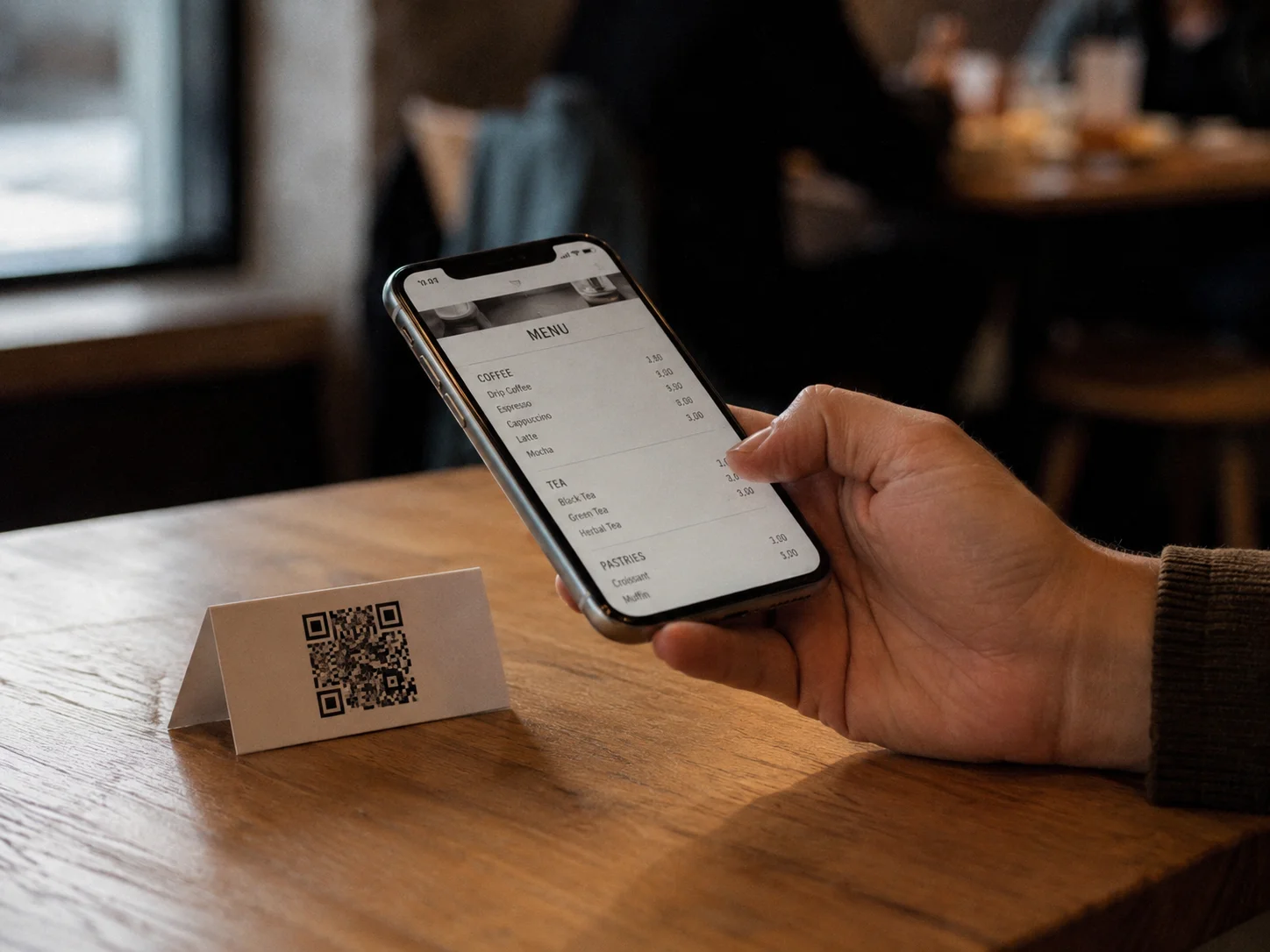
- Low stakes — a restaurant table menu pointing at a stable PDF or page: static code. No cap, no maintenance, nothing to cancel.
- Mid stakes — a regional flyer campaign where you want scan counts and might swap the landing page: dynamic code, but confirm the plan's scan limit covers your expected volume with headroom.
- High stakes — packaging on a national product run: dynamic code on a paid plan with an explicit no-scan-limit term, ideally on a custom domain you control so the redirect is not hostage to one vendor.
For most individuals and small businesses, a static code covers the job and the scan-limit question disappears. For the cases that genuinely need dynamic, the limit is worth reading closely before you commit.
How QR Nova Handles Unlimited Scans
QR Nova's static codes have no scan limit and need no account. Enter a URL, customize the colors and logo if you want, download PNG or SVG. Because QR Nova is not part of any scan, there is no counter to hit — scan 1 and scan 5,000,000 behave identically.
Dynamic codes are where QR Nova differs most from the platforms above. The free plan keeps dynamic codes active with no scan cap and no expiry date. If you upgrade for extra features and later cancel, your existing codes keep redirecting — the plan change does not deactivate anything you have already printed. Breaking live printed material to force an upgrade is not a lever we use.
No credit card is required to start, and there is no trial clock counting down. The why QR Nova page lists exactly what the free plan includes and what paid plans add.
When a Scan Cap Doesn't Matter
A scan limit is not always a problem worth solving. If you are printing 50 handouts for a one-off workshop, a 500-scan free tier will never be tested. If your campaign is a two-week promotion and the code is retired afterward, the cap is irrelevant as long as it clears your expected volume.
Scan caps also do not matter when the analytics are the point. If you are running a campaign where scan data drives budget decisions, you need a dynamic code and you are going to be on a paid plan anyway — one that removes the limit. Paying for redirect infrastructure and the reporting that comes with it is a reasonable trade when the data has real value.
The "unlimited scans" question matters most for permanent, physical, hard-to-reprint material: signage, packaging, plaques, printed cards in long circulation. That is exactly where a static code — unlimited by construction — is the safer default.
Generate an Unlimited-Scan QR Code at QR Nova
The generator is at qrcodenova.com/en/qr-code-generator. Static codes: no account, no scan limit, no expiry, PNG and SVG download. Enter your URL, customize, download.
If you need a dynamic code for analytics or an editable destination, create a free account — no credit card — and the code stays scan-unlimited on the free plan. The code you print today keeps working at scan 500, scan 5,000, and beyond.
Frequently asked questions
Do free QR codes have a scan limit?
Static QR codes have no scan limit because no server counts the scans — your phone reads the URL straight off the image. Dynamic QR codes on most free tiers do cap scans: QR Tiger and Flowcode both stop redirecting after 500 scans on their free plans, based on their published pricing as of August 2026.
What happens when a QR code hits its scan limit?
On most platforms the code keeps scanning but stops redirecting to your destination. Instead it lands on the platform's upgrade page. The printed code looks fine and the scan succeeds, so the failure is easy to miss until customers report a broken link.
Which free QR code generator has unlimited scans?
Any generator that outputs a static QR code gives you unlimited scans — QR Nova, QR Code Monkey, and Adobe Express all do this for free. QR Nova also keeps dynamic codes scan-unlimited on its free plan, which most competitors do not.
Why do dynamic QR codes limit scans on free plans?
Every scan of a dynamic code is a request to the platform's redirect server, which costs money to run. Free-tier scan caps are how platforms convert free users to paid. Static codes have no such cost, so there is nothing to meter.
How do I check for a scan limit before printing?
Read the plan's fine print for a scan or 'view' number, then scan your own code 15 to 20 times and confirm it still reaches your destination. For a real launch, generate a static code so the question never comes up.
Does QR Nova limit scans on the free plan?
No. Static codes from QR Nova have no scan cap and require no account. Dynamic codes on the free plan also have no scan cap and no expiry date — if you later cancel a paid plan, the codes keep redirecting.
Is 'unlimited scans' the same as 'never expires'?
No. A code can have unlimited scans but still expire on a trial clock, and a code with no time limit can still die at a scan cap. You need both. Static codes give you both by design.
Related articles
Free QR Code Generator: No Sign Up, No Catch
Free QR code no sign up — generate, download, done. No email, no trial, no credit card. QR Nova codes never expire and have unlimited scans.
Do QR Tiger Codes Expire? What Happens When You Cancel
Do QR Tiger codes expire? Free codes die at 500 scans, paid codes deactivate when you cancel. Which codes survive, and how to avoid the trap.
Dynamic QR Code Scam: 2 Traps to Avoid (2026)
A dynamic QR code scam has two forms: predatory platforms that deactivate your codes, and criminals who swap the destination. How to spot both.
Generate a QR code with no scan limit
Get started